How to Get Your Local Business Found on Google and ChatGPT (Without Hiring a Developer)

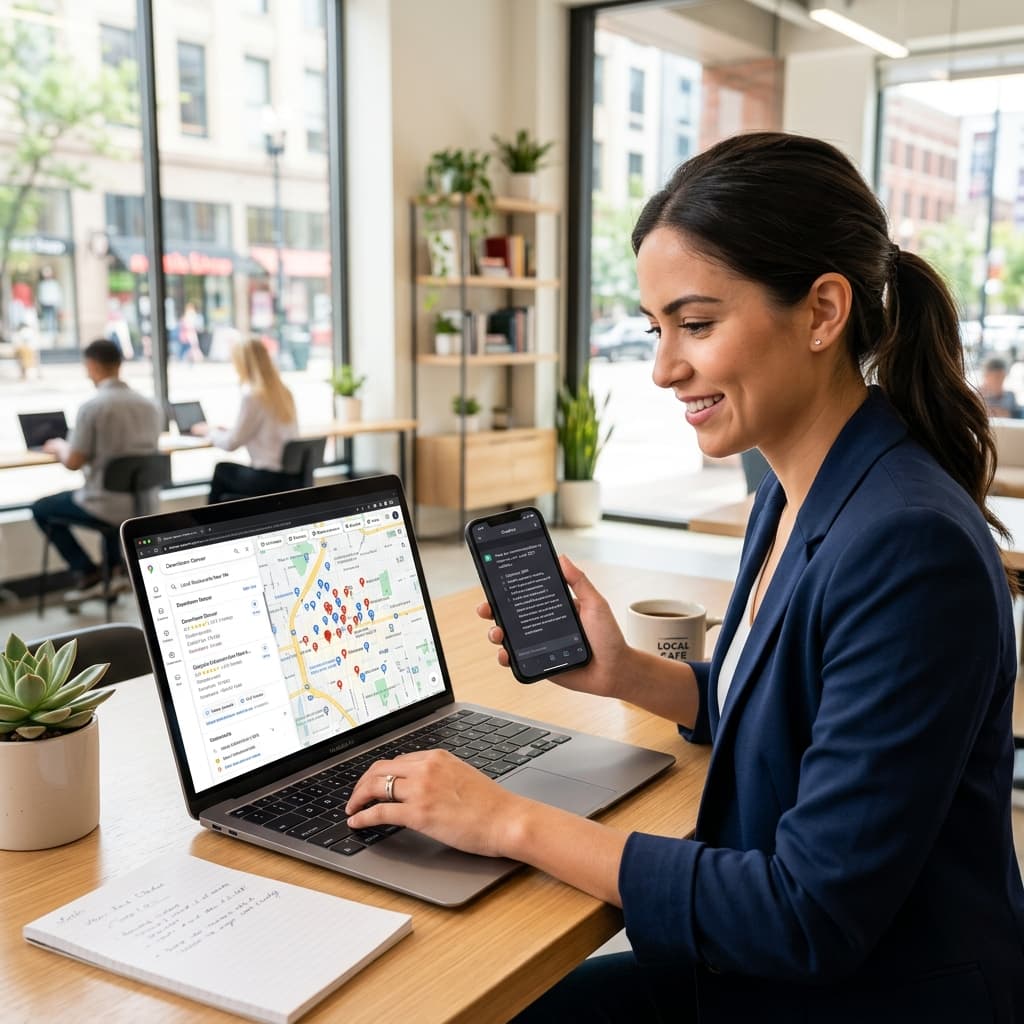
You opened your business to serve customers in your area. But if those customers search for you on Google or ask ChatGPT for a recommendation, do you show up?
For most local businesses, the honest answer is: not really.
It's not because your business isn't good enough. It's because the way people search has changed, and most businesses haven't caught up. This guide walks you through exactly what to fix, step by step, without hiring an agency or learning any technical tools.
Why Your Business Might Be Invisible Online
Search engines and AI tools like ChatGPT don't discover businesses the way word of mouth works. They look for specific signals to decide which businesses to show and recommend.
If those signals are missing or inconsistent, your business simply doesn't appear, even if you've been operating for years.
The two biggest reasons local businesses stay invisible:
1. An incomplete or unoptimized Google Business Profile. Google Business Profile (GBP) is the free listing that shows your business on Google Maps and in local search results. Most business owners create one and forget it. But Google uses the quality and completeness of your profile to decide how prominently to show you.
2. No website or a website Google can't read properly. AI tools like ChatGPT and Perplexity don't browse your Instagram page. They need a real web presence with structured information: your name, address, hours, services, and what makes you different.
The good news: both of these are fixable without a developer, a big budget, or months of work.
Step 1: Claim and Complete Your Google Business Profile
If you haven't claimed your Google Business Profile yet, that's the first thing to do. Go to google.com/business and follow the steps to claim or create your listing.
Once you're in, go through every section and fill it out completely. Most businesses skip at least half of it.
Here's what actually moves the needle:
Business name, address, and phone number. These need to match exactly what appears on your website and everywhere else online. If your name is "Maria's Bakery" on Google but "Maria Bakery" on Instagram, that inconsistency confuses both Google and AI tools.
Business hours. Keep these updated, including holidays. Google shows a red "Closed" label when your hours are wrong. That kills walk-in traffic.
Business category. Choose the most specific primary category you can. "Bakery" is better than "Food and Drink." "Artisan Bakery" is better than "Bakery" if it applies.
Photos. Businesses with more than 10 photos get significantly more views and direction requests than those with fewer. Add photos of your space, your products, and your team. Update them regularly.
Business description. Write 2-3 sentences that describe what you do, who you serve, and what makes you different. Use natural language, the same way a customer would describe your business to a friend.
Products or services. List your main offerings with short descriptions. This helps Google match you to specific searches like "best croissant near me" or "deep tissue massage."
Step 2: Get Reviews (and Respond to Them)
Reviews are one of the strongest signals Google and AI tools use to evaluate a business.
ChatGPT and Perplexity don't just count your stars. They read the language inside reviews to understand what your business does and where it's located. A review that says "best espresso in Canggu" tells AI tools something a star rating alone doesn't.
How to get more reviews:
Ask your happiest customers directly, right after a good experience. Something like: "Would you mind leaving us a Google review? It really helps us." Most people say yes when you ask in person.
Send a follow-up message on WhatsApp with your direct review link. You can find your review link inside your Google Business dashboard.
Respond to every review. Thank positive reviewers by name and mention something specific. Address negative reviews calmly and professionally. Google sees this as a sign that you're actively managing your business.
Step 3: Make Sure Your Information Is Consistent Everywhere
Here's something most business owners don't know: AI tools like ChatGPT don't just pull information from Google. They read your website, your Facebook page, your Instagram bio, any directories you're listed in, and more.
If your address, phone number, or business name differs across platforms, AI systems pick up on that inconsistency. And inconsistency means uncertainty. Uncertain businesses get left out of recommendations.
Go through these and make sure your name, address, and phone number match exactly:
- Your Google Business Profile
- Your website or mini-site
- Your Instagram and Facebook bio
- Any local directories you're listed in (Yelp, TripAdvisor, local guides, etc.)
- Your WhatsApp Business profile
This sounds tedious, but it's a one-time cleanup that pays off for months.
Step 4: Have a Website That AI Can Actually Read
AI search tools can't browse Instagram. They need a real web page with structured information to understand your business.
Your website (or mini-site) should include:
- Your full business name
- Your physical address
- Your hours
- What you do and who you serve
- Your phone number and WhatsApp
- A short FAQ section with common questions customers ask
The FAQ section is especially valuable. AI tools love content written in natural language that answers real questions. "What are your opening hours on weekends?" is exactly the kind of question ChatGPT gets asked about local businesses, and exactly the kind of content that gets pulled into AI-generated answers.
Technically, AI tools look for something called schema markup: structured data embedded in your website's code that tells them clearly "this is a local business, here's its name, address, and hours." Most website builders don't add this automatically. It's one of the reasons many business websites exist but still don't show up in AI recommendations.
Step 5: Keep Your Information Fresh
Both Google and AI tools favor businesses that are actively maintained over those that haven't been touched in months.
A few simple habits make a big difference:
Post updates on Google Business. Share a photo of a new product, a seasonal promotion, or updated hours. Even one post per month signals that your business is active.
Update your hours for holidays. This one alone prevents customers from showing up at a closed door, which leads to bad reviews.
Add new photos periodically. Fresh photos tell Google your listing is being maintained.
Monitor your reviews weekly. Set aside 10 minutes every Friday to read new reviews and respond.
The Fastest Way to Do All of This
If this list feels long, here's the honest summary: the basics take a few hours to get right, and then it's a matter of small, consistent actions over time.
The businesses that show up on Google and get recommended by ChatGPT aren't doing anything magic. They have complete information, consistent presence across platforms, real reviews, and a website that AI systems can read.
Linkgrove was built to handle the technical parts of this automatically. When you create a mini-site with Linkgrove, your business gets a professional web page with schema markup and AI-optimized structure built in. Connect your Google Business Profile, and you get a monthly report showing exactly how many people found you, called you, or asked for directions, plus specific actions you can take to improve.
No developer. No agency. Just a clear picture of where you stand and what to do next.
Get started free at linkgrove.site
Quick Reference: What to Fix First
If you're short on time, prioritize in this order:
- Claim and complete your Google Business Profile (name, address, hours, photos, category, description)
- Ask your last 5 customers for a Google review
- Make sure your name and address match on Google, your website, and social media
- Add a FAQ section to your website
- Post one update on your Google Business Profile this week
That's it. These five actions will do more for your local visibility than any expensive tool or agency pitch.
Pablo Gubelin
Founder of Linkgrove. Helping local businesses get found on Google and AI search tools without the agency price tag.
Get your business found on Google and AI.
Start your free minisite today and get actionable steps to grow your local visibility. Ready in minutes.